Tuesday, August 26, 2008

Let's all give a warm What's Up welcome to Erika Dyck. Erika is a native of our fair town, and first gained fame, if not fortune, completing an MA here under the supervision of our very own Valerie Korinek. After earning her Ph.D. at McMaster University, Erika, a specialist in medical history, joined the University of Alberta on a joint appointment to both the Faculty of Medicine and the History Department. Her ship has now come in, however, and she returns to this department as an Associate Professor.

The fact that Erika has now joined us is reason enough for celebration. But wait! There's more!

Erika's new book is just out. Psychedelic Psychiatry: LSD from From Clinic to Campus (Baltimore: Johns Hopkins Press, 2008). The book blows the lid off the spectacular counterculture myths about LSD, which turns out to have been very much a Saskatchewan product. It came about at at time when Saskatchewan's reputation as the North American home of universal health care, and the Tommy Douglas government's willingness to spend money on medical research, attracted skilled scientists from across Canada and beyond to this campus and to facilities around the province. The ultimate anti-establishment drug came about thanks to earnest and highly skilled medical researchers conducting well-funded research at the leading edge of psychopharmacology. Click here to learn more, and be sure to add terrific new book to your personal collection.

And in case you were wondering, you can rest easy (or disappointed, as the case may be): this book was printed on Acid-free paper.

Monday, August 11, 2008

This just in! A What's Up World Exclusive!

One of our very most loyal correspondents captured this action shot of our very own Dr. Lisa Smith just moments after she wed our dear friend (and, indeed, her dear friend) Mark Gudgeon this past weekend in London. Lisa and Mark have been a commuting couple for some time, plying the friendly skies from Saskatoon to Heathrow and back. This coming year Lisa is on sabbatical in, of all places, London. Needless to say (but we'll say it anyway) all of us here at What's Up wish the happy couple a very Merry Marriage!
It seems like not so long ago that star reporter Wendy Gillis, make that Star Phoenix reporter Wendy Gillis, was a History student. In fact, it was not so long ago at all. Wendy graduated this past May with a double honours degree in History and Something Else.

Believe it or not, writing essays was never enough for Wendy. Not enough writing, that is. Wendy always intended to parlay her History degree into a career in journalism, and she worked hard to get to where she has already got. As of June, she was still Editor-in-Chief of the Sheaf (in which capacity she appears here, lobbying for improved funding for the paper), and she is a former intern and frequent contributor to Explore: A Journal of Discovery, Creativity and Innovation at the University of Saskatchewan published by our friends over at the Research Communications Office. These days, Wendy covers the city beat for the Star Phoenix. Her byline has appeared regularly on the front page in recent days, including today's sad lead on the death of a Saskatchewan soldier in Afghanistan, and last week's gut-churning review of the rides at this year's Ex. Just goes to show that with talent and hard work you can witness history unfolding and write for pay.
Congratulations to Steve Cavan, who for many years taught Classics at the U of S. Thousands of you will know Steve from his famous "Myths" class. Steve no longer teaches for us, but our loss is beers gain. Steve is the founder and commander-in-chief of the increasingly celebrated Paddock Wood Brewery, whose hand-crafted beers are made here and sold now in Manitoba, Saskatchewan, Alberta, and BC. Besides drinking real good, Steve's beers continue to garner awards. Not just those illegible little foil medallion thingys the Germans slap on their bottles, either, but real awards like Best Canadian Lager 2008, which the Calgary Beer Festival recently bestowed on Paddock Wood's wondrous Black Cat Lager, and the even more prestigious Best Locally Brewed Beer award from Planet S Magazine. As Steve says, "Think Globally. Drink Locally."

Thursday, August 07, 2008

The Diefenbaker Canada Centre of the University of Saskatchewan is looking for a few good students.

Our friends over at the Dief (located on our own fair campus) have part-time job openings available for museum interpreters.

They are looking for current U of S students in their second or third years of undergraduate study, generally, and since History Students are, by definition, good students, then that suggests that you might well be qualified for a job!!! And a rather nice and interesting (and indoor!) job, at that. Indeed, you might well be well qualified. (Please Note: as an equal-opportunity employer, the Diefenbaker Centre of Canada requires of applicants neither goose-stepping abillities nor a Communist Party affiliation. )

To learn more, check out the ad at the usask student employment website or just click here.

Friday, July 18, 2008

All hail the new chief!

Even by the relentlessly upbeat standards of this wee blog, it is worth noting that every single member of the What's Up team wishes to express their delight at news that Professor Valerie Korinek has agreed to serve as the new Head of the Department of History. Many of you already know Valerie, who is a distinguished historian of women in Canada with many publications to her name, and a fine teacher and colleague. Valerie's three-year term began July 1, and she has already moved into the Big Office and rolled her metaphorical sleeves up.

Excellence starts at the top in the History Department
, and Valerie's most immediate distinguished predecessor is Brett Fairbairn, an outstanding department head who left the seventh floor at the end of June to take on the more onerous and possibly almost as august post of
Provost and Vice-
President Academic
of the whole shebang, in which capacity he more or less runs this university. And rightly so.

Obviously, historians should always be in charge of everything, and so it is especially fine to report that a historian finally is.

Especially seeing as how its Brett. Brett Fairbairn led us from strength to strength and left us in fine shape -- to the extent that he has left us. He may wear a suit more often, but he remains, of course, a Professor of History and a fully paid-up member of this department. For his past and future service and for our ongoing ties, we are most grateful.

Wednesday, July 09, 2008

We here at What's Up and all our colleagues in the History Department are delighted to welcome Robert Englebert as our newest faculty member. Robert joins us from the University of Ottawa, to which he will return briefly this fall to defend his doctoral dissertation, Beyond Borders: Mental Mapping and the French River World in North America, 1763–1805”.

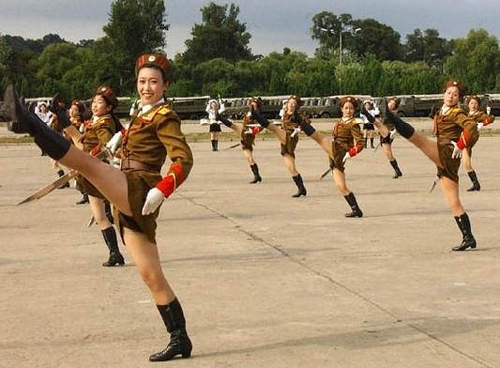
Denizens of the French River World, flinging in earnest

We mention this partly by way of introducing Robert Englebert to the far-flung What's Up community, but also to alert the less flung among you to the possibility that you might like to take a fling with his History 450.6, "French Canada Before 1800".

History 450.6 is an honours seminar that explores French North America writ large, from the European settlements on the shores of the St. Lawrence River to a sprawling French Atlantic empire that included the marshes of New Orleans, the gateway to the West in St. Louis, the sugar islands of the Caribbean, and the winding river valleys of the Canadian northwest. Students will soak up life on the powerful river highways of this continent that captured the imaginations of thousands of young men, who set out seeking work and high (if sometimes damp) adventure. The rivers they traveled, the peoples they encountered, the women they married, and the settlements they built came to define much of the interior of North America for nearly two hundred years. The French and the British both came as strangers to strange lands, but they quickly developed far different patterns of settlement. Among the French, policies of alliance and accommodation underscored numerous mixed unions with native women, which solidified alliances and gave rise to new peoples. French North America was very much about new encounters and old friends, and thus this course will explore the processes of interaction and métissage in its different forms throughout the French river world.

And speaking of new encounters .... Why not enroll in History 450.6 and see for yourself just how cooly the river runs through it.

Thursday, July 03, 2008

History, like Rust, never sleeps. Which is why the History Department keeps on developing fresh new courses for your scholarly delectation.

A "Special Topics" course is a designation reserved for new courses being offered on a one-off or trial basis. Courses numbered x99.6 or x98.3 are Special Topics courses. Sometimes, Special Topics courses arise because a faculty member is new to the department, and once they settle in their x98.3 and x99.6 courses will be converted to permanent status. More often, a Special Topics course represents a new departure for an established faculty member, usually in line with their recent research. These courses (which are fully developed and pass through a rigorous approval system at the departmental, college, and university level before joining our other distinguished course offerings) offer students the opportunity to engage with cutting-edge research and analysis, and give faculty the opportunity to present their latest ideas to a discerning audience of learners whose own inputs and responses are likely, in turn, to shape the instructor's thoughts on the matter. After all, teaching something is one of the best ways to learn something.

Having said all that, we have a number of fresh and exciting Speical Topics courses on offer for the coming regular season of 2008-09, including the following new, multi-media honours seminar that draws on John McCannon's expertise in bringing film, literature, art, and music to bear on the political, social, and historical realities of the USSR under Lenin and Stalin:

SCHOLARS OF THE WORLD, UNITE!

Enlist NOW for
History 498.2 (section 2)
Utopia in Power: Soviet Art and Culture, 1917-1953

2008-2009 Term 2 (winter 2009)
Monday @ 10:30-1:20pm
(note unusual time slot!)

Saturday, June 28, 2008

(Left to right): Simonne Horwitz, Mimi Badamuti, Inez Stephney (Human Sciences Research Council, Cape Town) and Saruto Labbo. Photo by Pamela Parlapiano
“It’s very fitting that we are here in a site that’s linked to rebellion and resistance. In my own work on Westfort (a leprosy hospital that’s just outside of Pretoria) from about 1890-1948, one of the themes that I constantly find is that the authorities tried to segregate and oppress people by gender, by race and by their disease. They were constantly trying to segregate them to take away their identity. Yet, it was very clear that people fought against that . . . . Yesterday there was a talk about the political prisoners signing their names and it’s the same with Mr. Pipe who was at Westfort . . . . a man who wrote to the newspapers, not as a person affected by leprosy, but as a person . . . . There were a number of occasions where the women patients, for example, had a sit down strike and refused to work until they were called by their names . . .”

-- Simonne Horwitz, when she was based at the Wellcome Unit for the History of Medicine at Oxford
Those eloquent words are to be found on the website of the Oral History Project of the International Leprocy Association Global Project on the History of Leprosy, and they can serve as a good introduction to Simonne Horwitz and the work that she does.

Dr. Simonne Horwitz (Oxford D.Phil, 2007) is one of the newest members of our department. Some of you may know Simonne already, as she recently completed a two-year Canada Research Chair Post-doctoral Fellowship under the direction of Jim Miller, and has already taught a brilliant senior research seminar, History 488.3: Topics in the History of Development, in which she and her students explored the history of health care, including the AIDs crisis, in Africa. We here at What's Up are delighted to report that Simonne will be offering History 488.3 again this coming year, in Term 1.

Indeed, now that Simonne is a full-time member of our department, she has the privilege of teaching more classes. And if you are fortunate enough to be a U of S undergraduate then you might just be eligible for the privilege of taking her ground-breaking new course:
History 299.6
Africans on the Move:
The History of Voluntary and Involuntary Migration in, and from,
Africa between the Earliest Times and the Present.


History 299.6 marks a new era for the History Department, as it offers our first comprehensive survey of African history. Click here and scroll to page 20 of the 2008-09 Handbook of History Programs and Courses for a description of History 299.6, which runs Tuesdays and Thursdays from 2:30 to 3:50.

Anybody, just anybody, can read about History 299.6 in the Handbook. But the following informal non-binding description comes to you by way of an exclusive scoop available only to What's Up readers and whoever they care to tell.

Sources close to What's Up recently obtained access to the following email from Dr. Simonne Horwitz herself, leaked here for the first time and presented in unedited form:

I'm very excited about teaching this class - it is the class I have always wanted to teach - a thematic history of Africa.*

It is basically an introduction to African history - from its inception (out of Africa thesis; hominids et al) through the development of the great Ancient African trading kingdoms of Songhay, Mali and Ghana (lots of gold and slaves and wives), we will look at slavery, colonialism and patters of labour migration. Of course there will also be a section on movement and health. We will end by looking at the brain drain from Africa and the refugee crisis. I'm bringing back primary documents from South Africa and promise quite a bit of group work - and some movies (if I can get my hands on them).
* When the always up-beat Dr. Horwitz says she is excited, she is really excited.

As this once-secret memo reveals, even as we speak Dr. Horwitz is in South Africa collecting primary documents, films, and other materials that students in History 299.6 can expect to encounter. (And on her honeymoon, to boot! Congratulations, Simonne & Dwight!)

There is a lot of buzz surrounding this newly approved course, and rightly so, because it opens up important new avenues of exploration for our students (and their cousins in adjacent fields, such as Anthropology and International Studies), and allows them to work with a dynamic instructor bursting with fresh and challenging ideas.

As of this posting there are still places available in History 299.6, "Africans on the Move: The History of Voluntary and Involuntary Migration in, and from, Africa between the Earliest Times and the Present." If you are reading this now you must already be online, which means that enrolling in History 299.6 could be just a hop, skip, and click away!
When historians engage in research that has an especially close connection to the here-and-now, the responsibility to enter into the public arena can sometimes loom large. Jim Miller is one who takes the role of 'public intellectual' very seriously. When Jim weighs in on contentious matters such as treaty rights or residential schools, he does so in an effort to and in the spirit of restoring historical context and accuracy to debates that, like so many on contentious issues, are inclined to degenerate into sloganeering, polemics, and mutual incomprehension. Jim's interventions are all the more effective for the straight talk, clarity, and concision with which he states a case. For the latest example of how historians can best serve the public interest, click here or here to read Jim's opinion piece in yesterday's Globe and Mail (June 27th): "The next residential schools chapter: No truth, no reconciliation".

Friday, June 20, 2008

Students fortunate enough to be taking History courses in the coming year have lots of fascinating options. Take (as it were) History 395.3, New Directions in Historical Research, a new (and, indeed, new kind of) course that we will offer each year with a different instructor and topic. The approval process for establishing History 395.3 as a regular offering was only recently completed, and we are now pleased to announce details of the inaugural edition, just in time for registration:

History 395.3 (T2)
New Directions in Historical Research.

Wheat and Wilderness: Canadian Regions, Boundaries, and the Places in Between


Unless you have an outrageously large monitor or freakishly good eyes,
click on image to enlarge


History 395.3, New Directions in Research is designed with two related goals in mind. One is to help top Ph.D. candidates prepare for careers founded on the teacher-scholar model by giving them the opportunity to design and deliver an upper-level course in their field of specialty. The other is to provide our senior History undergrads with a unique opportunity to engage with cutting-edge research and methodologies while gaining insight not only into the world of advanced graduate study, but also into the process by which a researcher becomes a teacher.

Teaching this class is a mark of distinction that ABD doctoral candidates in our department compete for via course proposals submitted to the department. ("ABD" or "all but dissertation" means that they have completed all their training and are engaged in researching and writing a book-length doctoral dissertation -- a.k.a. thesis -- based on original and ground-breaking research; the last step prior to being crowned with a Ph.D. and sent off into the world to become a professor.

This first edition of History 395.3 will be taught by Merle Massie and will build upon her own research in Western Canadian history. Many of you will already know Merle as a published author, experienced T.A., and a dynamic public speaker. At last month's Buffalo Province History Conference Merle won a 'best-in-show' award for a conference presentation based on material germane to this course.

The History Department calls History 395.3 a "mentored course", mainly because each year one or more faculty mentors will be assigned to advise the instructor on course design, assignments, and assessment, and to confer with them as the course unfolds. This year, Merle Massie will have the backstage support of faculty mentors Bill Waiser and Gordon DesBrisay. And that's not all. Merle will be in no danger of running short of advice and support, because History 395.3 is a decidedly bi-lateral affair. Students, it turns out, also know a thing or two about teaching, and so there will also be "mentoring from below" as students in the class observe, comment on, and participate in the development of the course.

Sounds like a win-win situation? That's the idea.

If you or someone you love (or even someone you are not all that fond of, but, you know, respect) are in the market for a history course that promises to connect you to the worlds of grad studies, cutting-edge research, and the craft of teaching, then be sure to consider History 395.3. You might also consider 395 as a useful companion to our methodology course for Honours students, History 397.3, Approaches to History (T1).

For the entire splendid array of History Department 2008/09 course offerings, click here.


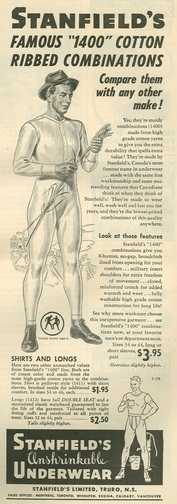
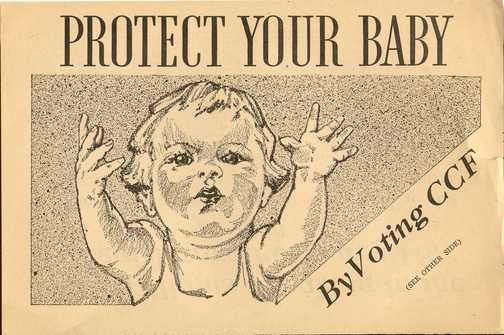
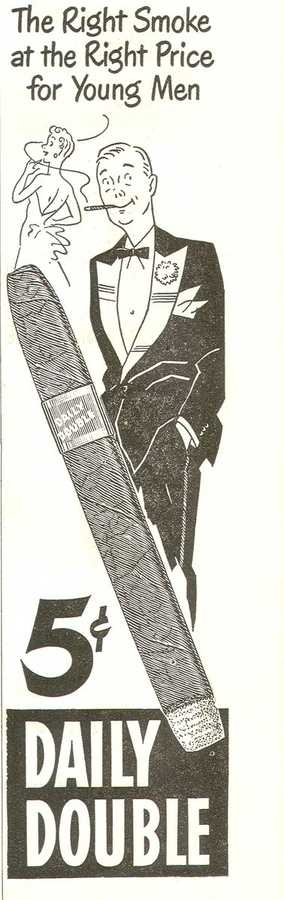
Loyal readers will already know that What's Up holds the new online exhibition sponsored by the Library, Persuassion: Print Advertising and Advocacy on the Prairies, in high regard. Indeed, we couldn't resist posting another fabulous image from the site. But it turns our that it is even better than we thought! We sent one of our crack reporters to cover yesterday's gala opening of the exhibit, a ritzy shirt-and-pants affair attended by an array of campus luminaries. Gordon DesBrisay represented the History Department in a hotly contested quiz on Saskatchewan advertising trivia, a topic on which he is an acknowledged non-expert. Curator Neil Richards then made a presentation that revealed that Persuassion is much, much more than a pretty site. It is structured in such a way as to make it an ideal teaching and research tool, suitable for advanced high school students and way on up. Click here, for example, to explore the pull down menus for "themes", "strategies", and "educational resources", among others, or to search the site.

Monday, June 16, 2008


“I started research in the field of Native-newcomer relations because I was perplexed by what I saw around me. Like most Canadians who think about the matter today, I wondered why things were so messed up, why were relations so bad between us, and why do Aboriginal communities very often have such serious socio-economic and health problems? How did it get like this?”


Last week, Jim Miller (not for the first time) reminded us all of how historians can make a difference in the here and now, helping to shape the present and future by skillfully and thoughtfully unveiling the past. Through his research, writing, engagement with public policy debates, and appearances on radio and television, Jim has played an important role in helping to make the story of Canada's residential schools a central pillar of Canadian history and Canadian identities. And as the above words attest, Jim Miller brings clarity and a no-nonsense approach to a matter of enormous complexity and controversy in Canada.

Last Wednesday, Jim featured prominently in CBC Newsworld's live coverage of Prime Minister Stephen Harper's historic apology on behalf of Canada's government for more than a century of abuse inflicted on natives at the schools. In offering his thoughtful expertise and analysis of the day's events, Jim did our department and the university proud -- indeed, early returns suggest that Jim's comments on television and in print reached an audience of 15.4 million people.

Jim Miller not only analysed the news last Wednesday, he made some himself: on the very day that the Harper Government offered its apology for the residential school system, it also announced that Jim had been awarded $1.4 million from the federal Canada Research Chair (CRC) program to renew his senior research chair in Native-Newcomer Relations, and to advance his current study of the truth and reconciliation process, and how churches and the federal government have attempted to make amends with residential school victims.

The renewal of Jim's CRC follows a rigorous review process, and attests once again to the quality and impact of the work Jim and his graduate students and postdoctoral researchers have produced in recent years. The grant is for seven years, and will allow Jim and his team to continue to inform our national debates. Click here for further details contained in the official University of Saskatchewan press release.

Friday, June 06, 2008


“Historians and archaeologists will one day discover that the ads of our time are the richest and the most faithful reflections that any society ever made of its entire range of activities.” Marshall McLuhan (1911-1980), Canadian communications theorist.

Marshall McLuhan was himself a master of the provocative soundbite, and prouncements like the one above seemed designed not so much to state a case as to dare anyone to refute it.

McLuhan's words also serve as the starting point for PERSUASION: Print Advertising and Advocacy on the Prairies a marvellous new online digital exhibit curated by Neil Richards for the University of Saskatchewan Library's Special Collections Department, the University of Saskatchewan Archives, and the Diefenbaker Centre. Through the presentation of over 600 exhibits it explores how print advertising and advocacy influenced and/or reflected the West's social, economic and political development. A year in the making, the site was released to the public last week: Check it out at http://scaa.usask.ca/gallery/persuasion/. And once you have read all the fascinating text and explored the site, treat yourself to the "random images" selection, here.
Congratulations to Gary Zellar, current and as we speak still the undisputed newest member of our department, whose book African Creeks: Estelvste and the Creek Nation was recently (2007) published by the University of Oklahoma Press.

From the publisher: "Among the Creeks, they were known as
Estelvste—black people—and they had lived among them since the days of the first Spanish entradas. They spoke the same language as the Creeks, ate the same foods, and shared kinship ties. Their only difference was the color of their skin. Professor Zellar’s book tells how people of African heritage came to blend their lives with those of their Indian neighbors and essentially became Creek themselves. Taking in the full historical sweep of African Americans among the Creeks, from the sixteenth century through Oklahoma statehood, Zellar unfolds a narrative history of the many contributions these people made to Creek history."

For more information, click here for the publisher’s website.

Friday, April 04, 2008

As those of you heading into your fourth year of the History Honours program prepare to meet with a faculty advisor (see below!) and so forth, you should also know about a $1,700 scholarship that students must apply for in order to be considered for, let alone win . The Kathleen McKenzie Scholarship is awarded by the Department of History annually to student entering the fourth year of an Honours program in History who has received the highest cumulative average across all courses compared to others who apply.

Do you think for a moment that Lucas B. Lucre (B.A. hons), seen right, ever regretted applying? To this day, he likes to take out his scholarship money and count it just to remind himself of how very great he is. And that's the point, because for all you know you might be great, too! But you won't know unless you apply.
To be considered for the scholarship, applicants must have completed 90 cu applicable to their History Honours degree, including at least 18 cu in History. The minimum academic standard is a grade average of 75 overall and 80 or better in History. The recipient must enroll in at least 18cu in his or her fourth year. Deadline for applications is April 30th, and the selection will be made by June 15th. Click here for the application form, or pick one up next time you are on the 7th floor.

Wednesday, April 02, 2008

The Department of History is home to the Prairie Region of the SSHRC-funded Network in Canadian History and Environment (NiCHE), proud sponsor of tomorrow's public lecture by Dr. David Schindler, who holds the Killam Memorial Chair and is Professor of Ecology at the University of Alberta. Professor Schindler is one of Canada's leading researchers, and a fine public speaker to boot. In "Are the Prairies Running Dry? Western Canada's Freshwater Supply in the 21st Century", he will discuss how natural drought, climate warming, damage to drainage patterns, and human water demands will cause water shortages in the prairies in the next few decades. Thursday April 3, 2008 at 4:00p.m. in Convocation Hall on the question of Everyone welcome!
Be Advised!
No less a personage than the Department of History Undergraduate Director himself has asked the What's Up team to remind all non-graduating History students to be sure to sign up and turn up for an advising session with a helpful and friendly History Faculty Advisor. Soon. The Advising season ends April 25th. There are still appointments open, and to make one you need only travel to the 7th floor and follow the signs to the sign-up sheet. Be Advised!
Timetable Change for 2008-09:
Those of you perusing the History Student Advising Handbook (see below, March 26th) for courses to take should note that Professor John McCannon's History 281.6, Military History, will run 8:30 a.m. MWF, rather than an hour later as in the printed Handbook and timetable. A notice has been added to the printed copies, and the online-versions will be amended shortly. The change was made so that students wishing to take History 281.6 would be able to enroll in the many MWF classes that run in the 9:30-12:30 slot. Professor McCannon was gracious enough to sacrifice an hour of sleep for the greater good, and we here at What's Up salute him for that.

Tuesday, April 01, 2008

On April 1, 2008, students in Pam Jordan's HIST 386 (Intelligence and Espionage in the Twentieth Century) participated in the second annual Spy Jeopardy Game. The game involved contestants’ answering challenging questions about spy history and breaking a secret code, while physically and mentally defending themselves from their opponents (who could cheat, steal, bribe other students, etc., in order to win the game—although defenestration was prohibited). This year, Michael Kunz (Double Honours in History and Political Studies) won the Spy of the Year Award and an entry in a Homeland Security log by earning the most points (Breonie MacMahon took the silver, and Carolyn Bartlett and Tyler Dovell tied for the bronze). His gold-plated certificate says that the award “also comes with a free copy of James Bond theme songs and a perpetual obligation to protect and defend the interests of the University of Saskatchewan’s Department of History.” Michael enthusiastically accepted the award before the class and pledged to fulfill his obligation to the best of his abilities.