· Non-Fiction Award
·
· Book of the Year Award
· Non-Fiction Award
·
· Book of the Year Award

 In one of its more extensive outreach operations, on October 22nd the University of Saskatchewan will host a reception at the eighteenth-century London (England) home of distinguished History alum and investment banker Calvin Redlick. Calvin has had a remarkable career since sailing off from this fair floor to pursue a law degree in Wales. Read more about Calvin, his Sask roots and extensive international branches, in this 2003 profile from Green & White, the U of S alumni magazine.
 The link, not to say collision, between the past and the present took on an alarming currency this past summer, when Russian and Georgian forces exchanged blows. Who better to provide Saskatoonians with an informed backgrounder than our own Russian history expert John McCannon, shown here August 18th, being interviewed by Jeff Rogstad of CTV.
History faculty and family members braved the wind and rain on Sunday, October 5, to take part in the 13th Race for Recovery, held annually to raise funds for Saskatoon's Hope Cancer Help Centre. Larry Stewart, one of the event's top fundraisers, took part in the 10k run. John McCannon also ran the 10k,finishing 5th overall and 3rd among male runners. Martha Smith-Norris's husband Rob and daughter Jacqueline were out in force as well, completing the 2k walk. Congratulations, and thanks, to all the participants.
Wednesday, October 1 at 9:30 a.m.and repeated on
Thursday, October 2 at 2:00Both sessions will be held in room 161 Murray Library and will provide time for hands-on practice.These are "drop-in" sessions -- no pre-registration; interested students should just show up.Additionally, please note that there will be a number of other subject specific drop-in library help sessions which could also be beneficial to history students.
 Congratulations to Mark Meyers, our new departmental webmaster, on the very successful rollout of the MARVELLOUS New DEPARTMENT OF HISTORY WEBSITE! The site, which Mark designed and and developed in conjunction with the College of Arts and Science web gurus, is already very cool and will continue to evolve over the next while.
"Young Canadians have the ears and eyes of the nation listening to their thoughts about what would make our country even better. The competition begins online. Young Canadians aged 18-25 are invited to apply for the show and campaign to be a finalist. Through debate and challenges, the candidates are narrowed down to four who appear on CBC Television, where they engage in a heated debate on the issues facing Canada today. The audience votes and the winner receives $50,000 and a paid internship at Magna International, The Dominion Institute and the Canada-US Fulbright program. Second, third and fourth place winners also receive cash and internship prizes. "
 Ph.D. candidate Merle Massie features in a recent profile published in the 5 September 2008 edition of OCN: OnCampusNews. Merle explains there that "history is about creating and shaping identity", and that she is interested in the identity of this, her home province—and how she might, in fact, change it. Merle is working on two main fronts, in fact. One concerns her own doctoral research on the "transition zone" between the borreal north and the prairie south of Saskatchewan. The other concerns her forthcoming teaching in her inaugural edition of History 395.3, New Directions in Historical Research. "Wheat and Wilderness: Canadian Regions, Boundaries, and the Places in Between" (about which more below) which will inform students that the regional concepts which divide Canada into easily described units like the prairies or the north actually over-simplify Canadian history. "Perception," she explains, "is the key. When we identify regions, we impose boundaries and create static geographies, lifecycles, and economics that really have no bearing on reality. When we define Saskatchewan as a 'prairie' province only, we allow one landscape to dominate our history, politics, and culture. I'm working to change this." And so shall her lucky students be.

 Bill Waiser will be reading from his newest book this Tuesday, September 16th, at 7:30 pm in the Prairie Ink restaurant of the McNalley Robinson Bookstore. Who Killed Jacki Bates? (Fifth House, 2008) begins with events on the morning of 5 December 1933, when a young RCMP constable discovered a grisly scene in the Avalon schoolyard in rural Saskatchewan. A young boy lay dead in a rented car, an apparent victim of carbon monoxide poisoning. In the car with him were his parents, who would survive both the effects of the gas and self-inflicted knife wounds only to face murder charges in their son’s death. The subsequent trial of Ted and Rose Bates ranks as one of the most hotly debated in Saskatchewan history. Bill examines an incident long held up as an example of the sheer despair and bureaucratic heartlessness of the Depression and shows that the truth is much more complex. Bill's carefully researched take on the Jackie Bates story was first presented to the public as an episode of his celebrated "Looking Back" tv series on the CBC. One regular What's Up correspondent reports that he wept when he first heard Bill tell the story, though he went to add that the story will make you think and reflect as well as cry.
 Professor John Porter is a desperate man.
 Easter Seals Canada is a registered charity dedicated to serving children, youth and adults with disabilities, striving to ensure that no one is left behind. More than 100,000 Canadians and their families annually access programs and services provided by Easter Seals organizations across Canada.Help John Porter help Easter Seals and plummet in terrifying safety from a tall building. You can find the details at:Its best known services are the Easter Seals camp programs. In 2008, 22 camps across Canada provided camp opportunities to more than 6,000 kids with disabilities. Since 1949, an estimated 160,000 children with disabilities have attended Easter Seals camps.
 Let's all give a warm What's Up welcome to Erika Dyck. Erika is a native of our fair town, and first gained fame, if not fortune, completing an MA here under the supervision of our very own Valerie Korinek. After earning her Ph.D. at McMaster University, Erika, a specialist in medical history, joined the University of Alberta on a joint appointment to both the Faculty of Medicine and the History Department. Her ship has now come in, however, and she returns to this department as an Associate Professor.
 This just in! A What's Up World Exclusive!
 It seems like not so long ago that star reporter Wendy Gillis, make that Star Phoenix reporter Wendy Gillis, was a History student. In fact, it was not so long ago at all. Wendy graduated this past May with a double honours degree in History and Something Else.
 Congratulations to Steve Cavan, who for many years taught Classics at the U of S. Thousands of you will know Steve from his famous "Myths" class. Steve no longer teaches for us, but our loss is beers gain. Steve is the founder and commander-in-chief of the increasingly celebrated Paddock Wood Brewery, whose hand-crafted beers are made here and sold now in Manitoba, Saskatchewan, Alberta, and BC. Besides drinking real good, Steve's beers continue to garner awards. Not just those illegible little foil medallion thingys the Germans slap on their bottles, either, but real awards like Best Canadian Lager 2008, which the Calgary Beer Festival recently bestowed on Paddock Wood's wondrous Black Cat Lager, and the even more prestigious Best Locally Brewed Beer award from Planet S Magazine. As Steve says, "Think Globally. Drink Locally."
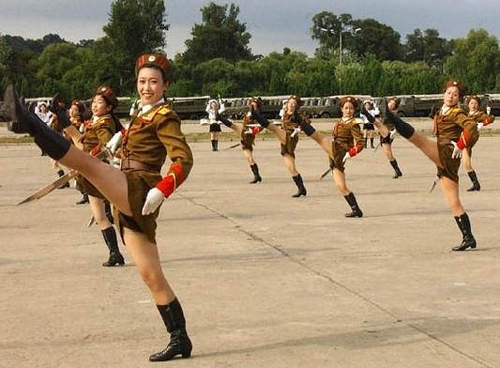 The Diefenbaker Canada Centre of the University of Saskatchewan is looking for a few good students.
 All hail the new chief!
  , an outstanding department head who left the seventh floor at the end of June to take on the more onerous and possibly almost as august post of
 We here at What's Up and all our colleagues in the History Department are delighted to welcome Robert Englebert as our newest faculty member. Robert joins us from the University of Ottawa, to which he will return briefly this fall to defend his doctoral dissertation, “Beyond Borders: Mental Mapping and the French River World in North America, 1763–1805”.
 Enlist NOW for
 (Left to right): Simonne Horwitz, Mimi Badamuti, Inez Stephney (Human Sciences Research Council, Cape Town) and Saruto Labbo. Photo by Pamela Parlapiano
“It’s very fitting that we are here in a site that’s linked to rebellion and resistance. In my own work on Westfort (a leprosy hospital that’s just outside of Pretoria) from about 1890-1948, one of the themes that I constantly find is that the authorities tried to segregate and oppress people by gender, by race and by their disease. They were constantly trying to segregate them to take away their identity. Yet, it was very clear that people fought against that . . . . Yesterday there was a talk about the political prisoners signing their names and it’s the same with Mr. Pipe who was at Westfort . . . . a man who wrote to the newspapers, not as a person affected by leprosy, but as a person . . . . There were a number of occasions where the women patients, for example, had a sit down strike and refused to work until they were called by their names . . .”Those eloquent words are to be found on the website of the Oral History Project of the International Leprocy Association Global Project on the History of Leprosy, and they can serve as a good introduction to Simonne Horwitz and the work that she does.
-- Simonne Horwitz, when she was based at the Wellcome Unit for the History of Medicine at Oxford
I'm very excited about teaching this class - it is the class I have always wanted to teach - a thematic history of Africa.*
It is basically an introduction to African history - from its inception (out of Africa thesis; hominids et al) through the development of the great Ancient African trading kingdoms of Songhay, Mali and Ghana (lots of gold and slaves and wives), we will look at slavery, colonialism and patters of labour migration. Of course there will also be a section on movement and health. We will end by looking at the brain drain from Africa and the refugee crisis. I'm bringing back primary documents from South Africa and promise quite a bit of group work - and some movies (if I can get my hands on them).
 Unless you have an outrageously large monitor or freakishly good eyes,
 “I started research in the field of Native-newcomer relations because I was perplexed by what I saw around me. Like most Canadians who think about the matter today, I wondered why things were so messed up, why were relations so bad between us, and why do Aboriginal communities very often have such serious socio-economic and health problems? How did it get like this?”
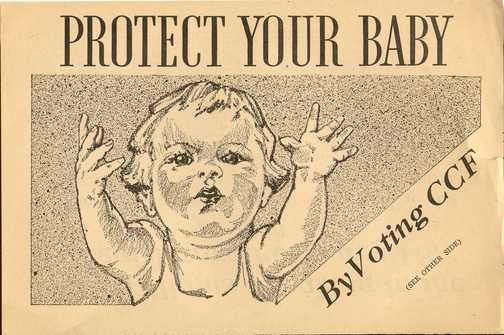
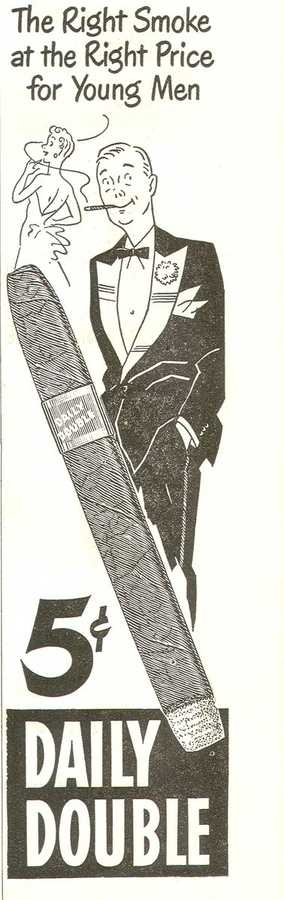 “Historians and archaeologists will one day discover that the ads of our time are the richest and the most faithful reflections that any society ever made of its entire range of activities.” – Marshall McLuhan (1911-1980), Canadian communications theorist.
 McLuhan's words also serve as the starting point for PERSUASION: Print Advertising and Advocacy on the Prairies a marvellous new
 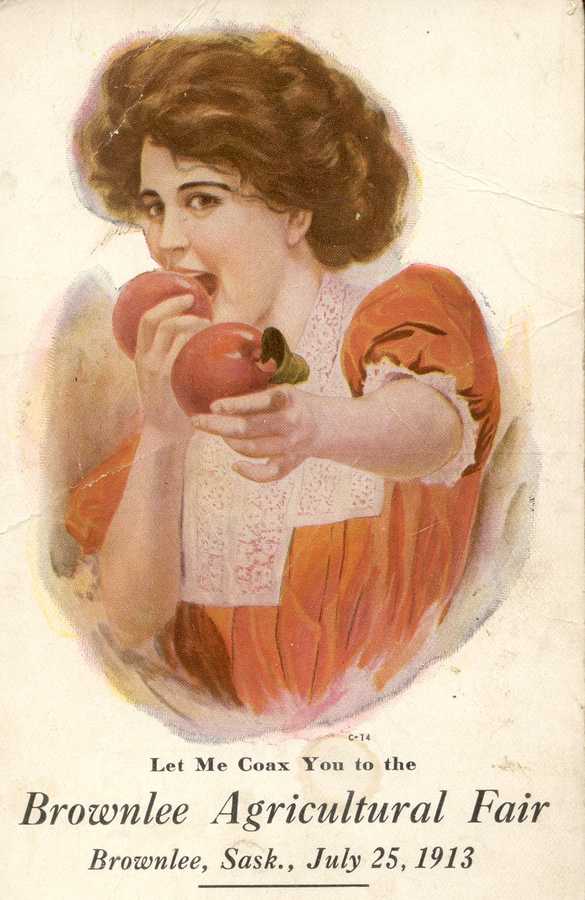 online digital exhibit curated by Neil Richards for the University of Saskatchewan Library's Special Collections Department, the University of Saskatchewan Archives, and the Diefenbaker Centre. Through the presentation of over 600 exhibits it explores how print advertising and advocacy influenced and/or reflected the West's social, economic and political development. A year in the making, the site was released to the public last week: Check it out at http://scaa.usask.ca/gallery/persuasion/. And once you have read all the fascinating text and explored the site, treat yourself to the "random images" selection, here.
 Congratulations to Gary Zellar,
  current and as we speak still the undisputed newest member of our department, whose book African Creeks: Estelvste and the Creek Nation was recently (2007) published by the University of Oklahoma Press.
 For more information, click here for the publisher’s website.
 apply.
 The Department of History is home to the Prairie Region of the SSHRC-funded Network in Canadian History and Environment (NiCHE), proud sponsor of tomorrow's public lecture by Dr. David Schindler, who holds the Killam Memorial Chair and is Professor of Ecology at the University of Alberta. Professor Schindler is one of Canada's leading researchers, and a fine public speaker to boot. In "Are the Prairies Running Dry? Western Canada's Freshwater Supply in the 21st Century", he will discuss how natural drought, climate warming, damage to drainage patterns, and human water demands will cause water shortages in the prairies in the next few decades. Thursday April 3, 2008 at 4:00p.m. in Convocation Hall on the question of Everyone welcome!
 On April 1, 2008, students in Pam Jordan's HIST 386 (Intelligence and Espionage in the Twentieth Century) participated in the second annual Spy Jeopardy Game. The game involved contestants’ answering challenging questions about spy history and breaking a secret code, while physically and mentally defending themselves from their opponents (who could cheat, steal, bribe other students, etc., in order to win the game—although defenestration was prohibited). This year, Michael Kunz (Double Honours in Hist
 ory and Political Studies) won the Spy of the Year Award and an entry in a Homeland Security log by earning the most points (Breonie MacMahon took the silver, and Carolyn Bartlett and Tyler Dovell tied for the bronze). His gold-plated certificate says that the award “also comes with a free copy of James Bond theme songs and a perpetual obligation to protect and defend the interests of the University of Saskatchewan’s Department of History.” Michael enthusiastically accepted the award before the class and pledged to fulfill his obligation to the best of his abilities.
 Last week, John McCannon, seen left asleep at the podium, traveled to Moscow just long enough to jet-lag himself and take part in an international conference on "Imagined Space: Culture and Geography in Russia," sponsored by the Russian State Institute for the Study of Cultural and Natural Heritage, founded by Dmitrii Likhachev, Gorbachev's cultural and academic adviser during the perestroika years. John spoke (in Russian, mind you) on allegorical conceptions of geography in turn-of-the-century Symbolist painting, then flew back from Russia with exhaustion.
 Historians established some years back that our Victorian fore-parents did indeed have sex.